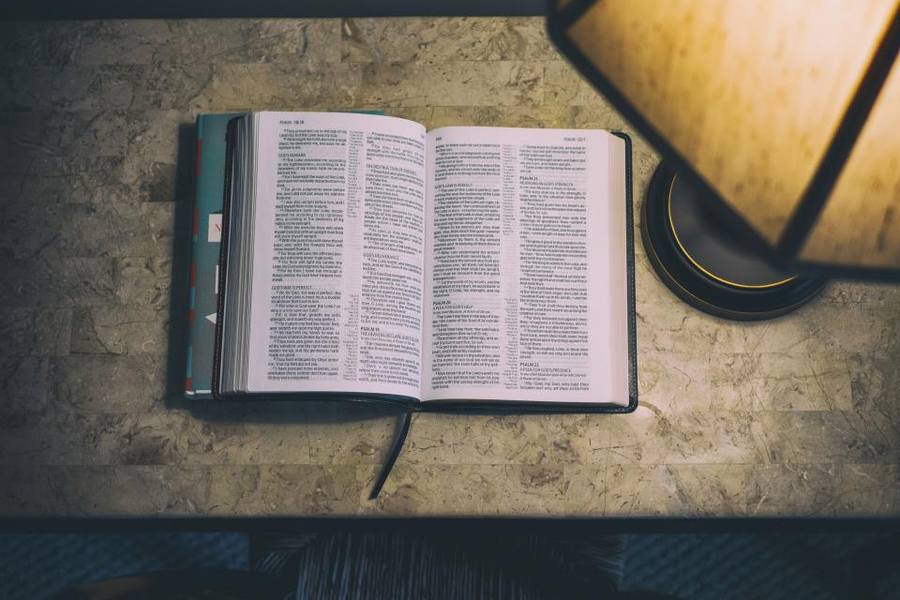
Amber Bedside Reading Light
Temsili görsel (stok fotoğraf); ürünün kendisi değildir.
Blue Light And Sleep Onset
Light in the blue part of the spectrum suppresses melatonin production and shifts the circadian clock later, and the effect in the hours before bed is well documented.
Amber light around fifteen hundred kelvin carries almost no blue content, which means reading by it has very little effect on sleep onset compared with a white lamp.
The effect size in ordinary domestic conditions is smaller than popular coverage suggests, and for anybody who genuinely struggles to fall asleep it is a cheap and low-risk thing to try.
Text Contrast Is Worse
Amber light renders black text on white paper as dark brown on orange, which reduces contrast and makes small print harder to read than under white light.
That is the unavoidable trade, and anybody reading dense or small text at length will find an amber light more tiring on the eyes.
Larger print and a higher brightness setting compensate somewhat, and increasing brightness partly offsets the sleep benefit being sought.
Colour Is Effectively Gone
Under amber light colour discrimination largely collapses, which makes illustrated books, photographs and anything colour-dependent unusable.
For text-only reading that does not matter at all, and for a cookbook, an art book or a magazine it makes the light the wrong choice entirely.
A light offering both an amber and a warm white mode covers both, and a single-mode amber light is genuinely limited in what it suits.
Wake-Up Disturbance In A Shared Room
Amber light is less visually disruptive to a sleeping person than white light, both because of the spectrum and because it is usually dimmer.
Combined with a shielded head aimed at a page, it is the least intrusive way to read beside somebody asleep.
It is not invisible, and a partner sensitive to any light will still notice it, which no reading light solves.
Screens Undo It
Reading by amber light while checking a phone repeatedly defeats the entire purpose, since a screen at close range delivers far more blue light than a room lamp does.
Night-shift and warm display modes reduce that substantially, and the content itself being stimulating is a separate factor that no colour setting addresses.
The light is one part of a bedtime routine and, used alone alongside unchanged screen habits, will not deliver much.
Placement affects how much light reaches the eye directly rather than by reflection from the page, and light entering the eye directly is what drives the circadian effect. A light positioned below eye level and aimed down at a page delivers almost all its output as reflection, which is considerably gentler than a lamp sitting at eye height. That single positioning choice probably matters as much as the colour temperature and costs nothing at all.
Dimming to the lowest usable level compounds the same effect, since total light entering the eye matters alongside its spectrum. A bright amber lamp is doing less good than a dim one.
The Verdict
A cheap and reasonable thing to try for anybody struggling with sleep onset, with a genuine and unavoidable cost in text contrast.
Colour discrimination collapses, small print is harder, and phone use alongside it undoes the benefit entirely.
Worth trying if you struggle to fall asleep. Pointless if you check your phone in bed anyway.
Bir bakışta
Artılar
- Almost no blue content before sleep
- Least intrusive light beside a sleeping partner
- Cheap and low-risk to try
- Dual-mode versions cover daytime reading too
Eksiler
- Text contrast is noticeably worse
- Colour discrimination effectively collapses
- Useless for illustrated or colour content
- Phone use alongside it undoes the benefit
Sıkça sorulan sorular
Does amber light actually help sleep?
It carries almost no blue, so it suppresses melatonin far less than a white lamp. The effect size in ordinary domestic conditions is smaller than popular coverage suggests, but it is cheap and low-risk to try.
What is the downside?
Contrast. Black text on white paper renders as dark brown on orange, which makes small or dense print harder to read and more tiring. Colour discrimination effectively collapses, so illustrated books are unusable.
Will it work if I use my phone in bed?
Not really. A screen at close range delivers far more blue light than a room lamp, so checking a phone alongside amber reading defeats the purpose. Night-shift modes help; stimulating content is a separate problem.
Teknik Özellikler
| Type | Amber low-blue reading light |
| Colour temperature | Around 1500 K |
| Mechanism | Minimal melatonin suppression |
| Trade-off | Reduced text contrast |
| Colour rendering | Effectively none |
| Unsuitable for | Art books, cookbooks, magazines |
| Shared rooms | Least disruptive option |
| Undone by | Phone screens at close range |
Özet
Worth trying for sleep onset, at a real cost in contrast. Pointless if the phone comes to bed anyway.
Amazon'da Fiyatı Kontrol Et